

ACCF - American Council for Capital Formation CONTACT US | SITE MAP
ABOUT ACCF | ACCF CENTER FOR POLICY RESEARCH | NEWS | NEWSLETTER | PROGRAMS | PUBLICATIONS
  RESEARCH AREAS
 
Search the site


Click here to receive our newsletter via email.

Forward this page to a friend. Click here.


LATEST POSTINGS

Capital Formation Newsletter
March-April 2008, Vol. 33, No. 2

• “ACCF Project 100 Days” Features Senior Advisers to Leading Presidential Candidates
• ACCF in the News...
• The Next First 100 days
• 156th Policy Evening Assesses The U.S. Economic Slowdown: Short- and Long-Term Policy Options
• How We Beat the ‘70s

Click here for the Capital Formation Newsletter.


Dr. Thorning Speaks at Ohio Climate Change Dialogue Group Forum on “Managing a Changing Climate: Challenges and Opportunities for the Buckeye State”

Dr. Margo Thorning, ACCF senior vice president and chief economist, spoke on “The Economics of Climate Change Policy” at the Ohio Climate Change Dialogue Group forum in Columbus, Ohio, on May 2, 2008. Speakers at the forum included energy and climate policy experts. Senator George Voinovich (R-OH) was the keynote speaker at the session.

Click here for the PowerPoint presentation.


ACCF/NAM Study of the Economic Impact of the Lieberman-Warner Climate Security Act

The National Association of Manufacturers (NAM) and the American Council for Capital Formation (ACCF) today unveiled a jointly commissioned study assessing the potential national and state economic impacts resulting from proposed climate change legislation, America’s Climate Security Act of 2007 (S. 2191), authored by U.S. Senators Joseph Lieberman and John Warner. The study utilized the National Energy Modeling System (NEMS), the economy-wide energy model used by the U.S. Department of Energy's Energy Information Administration.

Click here for the study.


“How We Beat the ‘70s”

In an op-ed in The Wall Street Journal, “How We Beat the ‘70s,” ACCF president and CEO Mark Bloomfield made the case for keeping the capital gains tax at its current rate of 15 percent. “Let’s consider that not keeping our capital gains tax at its current rate (15%) will put us at a disadvantage when competing for global capital. On Jan. 20, a new president and a new Congress will begin work on a new economic policy. The lessons from cutting capital gains taxes over the past 30 years shouldn’t be ignored,” he said.

To read “How We Beat the ‘70s,” please click here.


Capital Formation Newsletter
January-February 2008, Vol. 33, No. 1

  • Senate Republican Whip Assesses Outlook for Post-2010 Tax Policy
  • Study Shows Adverse Effect of Corporate Taxes on Investment and Entrepreneurship
  • ACCF Scholar James Poterba Named New President and CEO of NBER
  • ACCF in the News
  • 154th ACCF Economic Policy Evening Looks At The U.S. Economic Slowdown – Have We Done Enough?

Click here for the Capital Formation Newsletter.


Capital Gains Tax Rates and the Economy

Dr. Margo Thorning, ACCF Senior Vice President and Chief Economist, appeared on Fox News with Neil Cavuto on January 31, 2008 to discuss the importance of maintaining low tax rates on capital gains, restraining the growth in entitlement spending, and avoiding climate change policies that slow U.S. economic and job growth.

To watch the video, please click here.


ACCF Supports Pro-Growth Economic Stimulus

ACCF President Mark Bloomfield was interviewed on January 18 by “BBC World” on the outlook for the U.S. economy and the prospects for enactment of a pro-growth economic stimulus package. Read more ...

Click here to see the video.


Study Finds Tax Reductions Contributed Significantly to Post-2001 U.S. Economic Expansion

A new ACCF special report presents highlights from an analysis by Dr. Allen Sinai, Decision Economics, Inc., of the impact of tax cuts and federal spending over the 2001-2006 period. The study concludes that tax cuts, including cuts in taxes on capital gains and dividends, were among the key factors that contributed substantially to the post-2001 expansion.


New Study Shows the Power of Tax Cuts

ACCF presents a recent analysis of “The Role of Fiscal Policy in the Post-2001 U.S. Economic Expansion” by Dr. Allen Sinai, Chief Global Economist, Decision Economics, Inc.

Click here to read the Special Report.


Energy Politics and the Need for Restraint

“Backed with tough rhetoric aimed at assuaging varying but vocal constituencies – from angry consumers to environmentally conscious voters – Congress has put forth a host of aggressive, and divergent, policies purportedly aimed at addressing the nation’s energy and environmental challenges,” former Senator Don Nickles and from Congressman Charles Stenholm, both ACCF directors, said in their commentary in Forbes.com, on November 9, 2007. “Sadly, the ‘energy’ bills coming out of both chambers contradict their implied intent. Instead, they would actually limit production of needed energy resources, raise energy costs and slow our economy.”

To read the Nickles-Stenholm commentary,
please click here.


Lieberman-Warner Climate Change Bill Will Lead to Higher Energy Prices, Lost Jobs and Reduced GDP

“A major stumbling block to the U.S.’s meeting the targets set forth in America’s Climate Security Act of 2007 (S. 2191) is projected increases in covered emissions and population growth over the next several decades,” Dr. Margo Thorning explained to members of the Senate Environment and Public Works Committee at a hearing on November 8, 2007. “Sharp cutbacks in U.S. energy use would be necessary to close the 55 percent gap in 2030 between projected emissions and the S. 2191 target.”

To read the testimony, please click here.

To read the ACCF press release on the Lieberman-Warner bill, please click here.


ACCF Perspective on Lieberman-Warner
Climate Change Bill

In an interview on E&ETV on November 1, Dr. Margo Thorning, ACCF senior vice president and chief economist, discussed why the Lieberman-Warner bill is not the direction the United States should take and that a carbon tax could be a more effective approach to GHG reductions. She also discussed the upcoming international climate talks in Bali, and indicated that the United States should stay focused on the "major economies" plan established last month.

To watch the interview, please click here.


ACCF Association Council Holds Fall Meeting

ACCF Association Council members met on September 11 to discuss capital formation policy issues of importance to their industries and to hear noted journalist David Wessel, deputy bureau chief of The Wall Street Journal and author of the Journal’s weekly “Capital” column, comment on the current economic outlook.

Click here to read more about the ACCF Association Council and other news about the ACCF in the September-October edition of Capital Formation.


Dr. Margo Thorning Speaks on “What Drives Gas Prices”

ACCF Senior Vice President and Chief Economist Margo Thorning spoke on “What Drives Gas Prices” at an Independent Women’s Forum roundtable discussion on Energy Today, Energy Tomorrow on August 27, 2007. The forum, moderated by ABC News Correspondent John Stossel, was broadcast live on CSPAN.

Please click here to watch CSPAN’s coverage of Dr. Thorning’s remarks.


Obama Campaign Advisor Speaks at ACCF Project 100 Days

Austan Goolsbee, the Robert P. Gwinn Professor of Economics at the University of Chicago Graduate School of Business, a columnist for the New York Times, and a top economic advisor for the Barack Obama presidential campaign, spoke to ACCF supporters on July 19. The event was the third session of the ACCF forum series, Conversations with the Economic Advisors to the 2008 Presidential Candidates.

To read more about the ACCF forum and other ACCF programs, click here for the July-August 2007 edition of Capital Formation, the newsletter of the ACCF.

The July-August 2007 edition of Capital Formation includes the following three special reports.

To read “New International Survey Shows U.S. Death Tax Rates Among Highest,” please click here.

To read “Making Savings Last During Retirement: Lessons from Behavioral Economics,” please click here.

To read “Energy, Economic and International Issues in Global Warming Policy,” please click here.


A Reality Check on Initiatives to Reduce GHG Emissions

A new ACCF report, "A Reality Check on Initiatives to Reduce Greenhouse Gas Emissions in California, Oregon, the Northeast and in Europe," describes the challenges facing states like California, Oregon and the northeastern states as they try to slow greenhouse gas emission growth. The study also reviews the slow progress in the European Union on GHG reduction and suggests cost-effective strategies and a global approach to slowing emission growth.

Please click here to read the study.


ACCF Speaks Out on “Energy, Economic and International Issues in Global Warming Policy”

ACCF Chief Economist Dr. Margo Thorning testified on July 24 before the U.S. Senate Committee on Environment and Public Works Subcommittee on Private Sector and Consumer Solutions to Global Warming and Wildlife Protection. Dr. Thorning’s testimony, “Energy, Economic and International Issues in Global Warming Policy,” focused on cost-effective strategies for integrating three key policy goals: security of energy supplies, protection for the environment and global energy poverty reduction.

Click here to read Dr. Thorning’s
executive summary and testimony.


A Lobbying Lesson for Tax Cuts, from 1978

“Today, with a change in power in Congress and a crowded field of presidential hopefuls, tax policy is once again on the front burner,” ACCF President & CEO Mark Bloomfield stressed in an opinion piece in the “K Street Insiders” section of The Hill, a widely read congressional newspaper that publishes daily when Congress is in session. The article discussed the strategy needed to mount a successful effort to change public policy.

To read “A Lobbying Lesson for Tax Cuts, from 1978,” pleas click here.


An ACCF Economic Perspective on Gasoline Pricing and the Domestic Fuel Market

The American Council for Capital Formation has developed an economic overview highlighting the variables affecting gasoline prices and the U.S. fuel market. This assessment uses government data to explore and explain historic and current supply and demand variables impacting prices and refining capacity. In view of legislation currently being considered by Congress, the information presents a timely foundation of research which policymakers should consider as they work to address many of the fundamental energy challenges we face as a nation in a globally competitive marketplace.

To see the economic overview, click here.

To see a summary of the key points, click here.


ACCF Speaks Out on “Price Gouging” Legislation

ACCF Senior Vice President and Chief Economist Margo Thorning was interviewed about the consequences of imposing price controls on “The Ron Smith Show” on WBAL radio on May 23, 2007. “History and economics teaches us price caps ultimately result in harsh unintended consequences, including shortages in the market and unnecessary economic hardship for consumers,” Dr. Thorning told listeners. An op-ed by Dr. Thorning, “Caprice at the Pump,” appeared in The Washington Times on May 23, and the Oil & Gas Journal reported on the ACCF study on the costly consequences of passing gasoline price control legislation in an article on June 13.

To listen to the WBAL interview, please click here.

To read “Caprice at the Pump,” please click here.

To read the Oil and Gas Journal article, click here.


ACCF Kicks Off Conversations with the Economic Advisers to the 2008 Presidential Candidates

Two key economic advisers to leading GOP presidential hopefuls addressed ACCF forums in March. Dr. Douglas Holtz-Eakin, director of Economic Policy for “John McCain 2008,” spoke on March 1st at the first session of the ACCF’s Conversations with the Economic Advisers to the 2008 Presidential Candidates. The Honorable N. Gregory Mankiw, former Chairman of President Bush’s Council of Economic Advisers, Professor of Economics at Harvard University, and an outside adviser to former Massachusetts Governor Mitt Romney’s presidential campaign, briefed ACCF supporters at the second candidate forum on March 28th.

Click here to read more about this new
ACCF program and other ACCF news
in the March-April issue of Capital Formation.


U.S. Tax Depreciation Rules for Energy Investment Less Favorable than Many Other Countries

A new study commissioned by the ACCF compares depreciation rates and effective tax rates for various energy investments for the United States and eleven foreign countries and finds that the U.S. generally has less favorable tax depreciation rules and higher tax rates for several key energy investments than many other countries, including a number of the U.S.’s major trading partners. The U.S. federal tax code not only hinders much needed energy investments but also makes it harder to slow the growth of greenhouse gas emissions. The study was released at a Capitol Hill briefing keynoted by Senator Chuck Hagel (R-NE) and Representative Jim Mattheson (D-UT) on May 2, 2007.

Click here to read the full study, “International Comparison of Tax Depreciation Rules for Selected Energy Investments.”

Click here to see an Executive Summary of the study.

Click here to see the tax rate comparison graph.

Click here to see the cost recovery comparison graph.


ACCF Study Shows Negative Economic Impact of
Price Gouging Legislation

April 10, 2007

The Honorable Charles Stenholm (D-TX), former Member of Congress, and the Honorable Bill Archer (R-TX), former Chairman of the House Committee on Ways and Means, unveiled an ACCF study demonstrating the economic impact of potential price gouging legislation on energy consumers and suppliers at a briefing on Capitol Hill on April 10, 2007. The ACCF study reviews past efforts to control gasoline prices during periods of supply curtailment and evaluates the impact current legislative proposals would have on consumers and industry from an economic perspective.

Click here to read the full study, Potential Effects of Proposed Price Gouging Legislation on the Cost and Severity of Supply Interruptions.

“Gasbags,” an op-ed by former Ways and Means Committee Chairman Archer and former Congressman Stenholm highlighting the importance of the ACCF study’s findings, ran in The Wall Street Journal on April 19, 2007. Both serve as members of the ACCF’s Board of Directors.

To read the Journal op-ed, click here.


ACCF Participates in “Energy Summit 2007”

American Council for Capital Formation
March, 2007

ACCF Senior Vice President and Chief Economist Margo Thorning spoke on “Carbon Policy Economics” at the Heartland Institute’s “Energy Summit 2007” on March 17 in Chicago. The Energy Summit provided an intensive policy workshop on environment and energy policy for legislative advisers.

Please click here for Dr. Thorning’s presentation.


Senate Finance Committee Chairman Baucus Speaks to ACCF Supporters


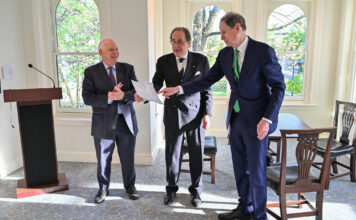
ACCF President and CEO Mark Bloomfield welcomes Finance Committee Chairman Max Baucus (D-MT) to ACCF forum.

“When you start a race, you need to know how far away the goal is,” Senator Max Baucus (D-MT), Chairman of the Finance Committee, told ACCF supporters on February 6 at the first ACCF Capital Formation Forum of 2007. At the forum, Chairman Baucus discussed the tough road he anticipates to reach the tax, trade and energy policy objectives he hopes to achieve.

To read more about the ACCF forum with Finance Committee Chairman Baucus or other 2007 ACCF programs, click here for the January-February edition of “Capital Formation,” the newsletter of the ACCF.

more postings
Economic Policy Evenings
Since 1982, ACCF Economic / Environmental Policy Evenings have brought together policy-makers, business leaders, media representatives and the Washington diplomatic community for informal monthly dinners.
ACCF Association Council
The ACCF Association Council, comprised of the leaders of the more than thirty association members of the ACCF, meets several times each year to help shape the ACCF's policy agenda.
For more than twenty years, ACCF Capital Formation Forums have welcomed GOP and Democratic policymakers, public policy experts and opinion shapers at roundtable sessions with ACCF supporters.
Benefactors Programs
The ACCF Benefactors Program gives individual supporters the opportunity to help develop ACCF economic policy research projects. Benefactors are also encouraged to participate in other ACCF programs.

ACCF, 1750 K Street, NW, Suite 400, Washington, DC 20006 | Tel (202) 293-5811 | Fax (202) 785-8165 | info@ACCF.org